
What Is General and Family Dentistry?
Most people do not start by asking, what is general and family dentistry? They start with a more practical question – who can help me keep my teeth healthy, treat problems early, and care for everyone in my household in one place? That is exactly where general and family dentistry fits.
General and family dentistry is the part of dental care focused on everyday oral health for both individuals and families. It covers prevention, routine maintenance, early diagnosis, and common treatments that help protect teeth and gums over time. It is often the first and most consistent point of contact patients have with a dental office, whether they need a checkup, a filling, advice about sensitivity, or a long-term plan to preserve their natural teeth.
What is general and family dentistry in simple terms?
In simple terms, general and family dentistry is the dental care most people need most often. It includes regular exams, professional cleanings, digital x-rays, gum health checks, cavity treatment, and guidance on how to avoid bigger problems later.
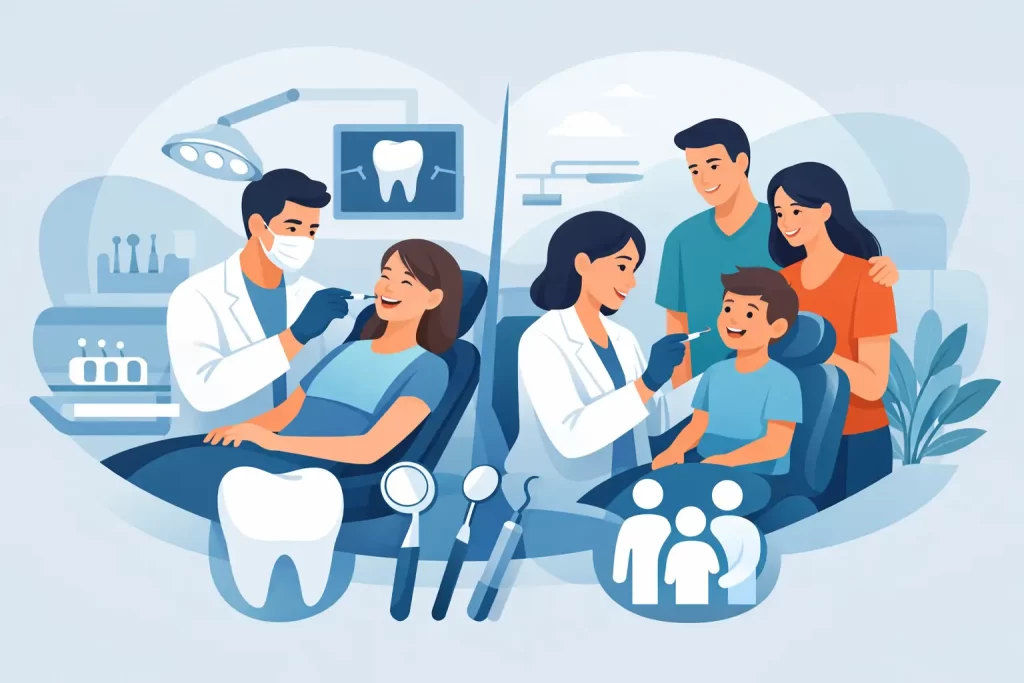
The word general refers to the broad range of routine dental services provided for overall oral health. The word family means that care is designed to support patients across different ages and stages of life. A child may need sealants and preventive visits, a busy adult may need a filling or crown, and an older patient may need dentures or support for worn teeth. A family dental practice is built to manage those changing needs with continuity and familiarity.
That continuity matters more than many people realize. When your dentist knows your history, your concerns, and your goals, care tends to feel more personal and more efficient. Small changes are easier to spot, and treatment decisions can be made with a fuller picture of your health.
The role of a general and family dentist
A general and family dentist does much more than clean teeth. The role is to help patients maintain oral health, identify issues early, and provide treatment before problems become more painful, complex, or expensive.
That can include diagnosing tooth decay, checking for signs of gum disease, repairing damaged teeth with white fillings or crowns, managing dental pain, and recommending preventive care based on a patient’s risk factors. It can also include monitoring bite changes, wear from grinding, and cosmetic concerns that affect confidence.
In many cases, a general dentist also serves as the coordinator of care. If a patient needs treatment beyond routine services, the general dentist helps determine the next step and whether referral is appropriate. But for a large percentage of everyday dental needs, general and family dentistry is where treatment begins and often where it stays.
What services are usually included?
The exact service mix can vary from one office to another, but general and family dentistry usually includes preventive, restorative, and diagnostic care.
Preventive care often involves dental assessments, cleanings, scale and polishing, x-rays, sealants, and advice on brushing, flossing, and diet. These visits are not just about keeping teeth looking clean. They are meant to catch issues while they are still manageable.
Restorative care focuses on repairing teeth that have already been affected by decay, damage, or infection. That may mean white fillings for cavities, crowns for weakened teeth, root canal therapy to save an infected tooth, or dentures when teeth have been lost. A strong family practice does not see restoration as separate from prevention. The goal is usually to preserve as much healthy tooth structure as possible and avoid future damage.
Many modern practices also include cosmetic options within a general dental setting. Teeth whitening, bonding, veneers, and aligners may be offered when patients want to improve the appearance of their smile along with its health. That does not mean every patient needs cosmetic treatment. It simply means oral health and smile confidence often overlap.
Why family dentistry is helpful for busy households
For parents and working adults, convenience matters. Family dentistry allows multiple members of the household to receive care from the same practice, often with shared records, coordinated scheduling, and a team that understands the family’s dental history.
There is also a comfort factor. Children often feel more at ease when they grow up visiting a familiar office, and adults appreciate not having to juggle separate providers for routine dental needs. Over time, that familiarity can make it easier to keep up with appointments instead of putting them off.
Still, family dentistry is not just about convenience. It is also about building long-term trust. A practice that sees patients consistently over the years can notice patterns such as recurring decay, shifting teeth, grinding habits, or changes in gum health. Those details matter because prevention is rarely one-size-fits-all.
What general and family dentistry does not mean
Some patients hear the term and assume it means basic care only. That is not always true. General and family dentistry includes routine services, but many practices also provide advanced restorative and cosmetic treatments in the same setting.
At the same time, it does not mean every possible dental procedure is handled in-house. It depends on the dentist’s training, technology, and service model. Some offices offer a broad mix that includes root canals, crowns, extractions, whitening, and aligners, while others may focus more narrowly on preventive care and simple restorations.
This is why choosing a dental office is about more than checking whether it offers cleanings. It helps to look for a practice that matches your likely needs, whether that means family convenience, restorative expertise, modern imaging, or a more comfortable patient experience.
Why prevention is such a big part of the answer
If you want to understand what is general and family dentistry, it helps to focus on prevention first. The best dental care is often the care that keeps you from needing more invasive treatment later.
A routine exam can uncover a cavity before it becomes a toothache. A cleaning can reduce the buildup that contributes to gum disease. Digital x-rays and intraoral cameras can reveal issues that are not visible in the mirror. Advice on home care can help patients who are doing their best but still running into the same problems again and again.
Prevention is also where the financial side comes in. Many patients delay care because they hope a small issue will settle on its own. Unfortunately, dental problems usually do not work that way. A minor area of decay can turn into a larger filling, then a crown, or even root canal treatment if ignored for too long. Early care is typically simpler, more comfortable, and less costly.
The patient experience matters too
Dental care is clinical, but it is also personal. Many people avoid the dentist not because they do not value oral health, but because they expect discomfort, judgment, or rushed conversations. A strong general and family dental practice understands that comfort is part of quality care.
That means taking time to explain findings clearly, presenting treatment options honestly, and helping patients feel informed rather than pressured. It can also mean offering a calm office environment, modern technology that improves efficiency and accuracy, and flexible payment options that make care easier to manage.
For many patients, confidence grows when they feel listened to. A dentist may recommend treatment based on clinical need, but the right plan still depends on the patient’s timeline, budget, and priorities. Sometimes the best choice is to treat immediately. Other times, a phased approach makes more sense. Good care makes room for that conversation.
How to know if you need a general and family dentist
If you need regular checkups, preventive care, help with cavities or damaged teeth, or a trusted provider for both children and adults, then a general and family dentist is usually the right place to start. It is especially valuable if you want one practice that can support routine maintenance and many common treatments under one roof.
It is also the right fit for patients who want a relationship, not just a procedure. When you have an ongoing dental home, it becomes easier to stay consistent, ask questions early, and make decisions before problems escalate.
At Restorative Dental Jamaica, that approach is centered on preserving natural teeth whenever possible, restoring smiles carefully, and making each visit feel professional, comfortable, and patient-focused. For families and individuals alike, that kind of care can make all the difference.
General and family dentistry is, at its core, about having a reliable place to return to for the health of your smile. When that care is thoughtful, modern, and tailored to your needs, routine dental visits stop feeling like something to get through and start feeling like an investment in your comfort and confidence.
Leave a reply








Leave a reply