
Best Dental Insurance for Restorative Care
A crown can save a cracked tooth. A root canal can stop pain and help you keep your natural smile. But once you see the treatment estimate, the next question is usually about cost. If you are searching for the best dental insurance for restorative care, the right answer is rarely the cheapest plan. It is the plan that actually helps when you need fillings, crowns, dentures, or other repair-focused treatment.
Restorative care is different from routine preventive dentistry. Cleanings and exams are often covered at a higher level, sometimes even right away. Restorative services usually come with more conditions. That is why many patients feel caught off guard when a plan looks affordable on paper but offers limited help when a tooth is damaged or painful.
What counts as restorative care?
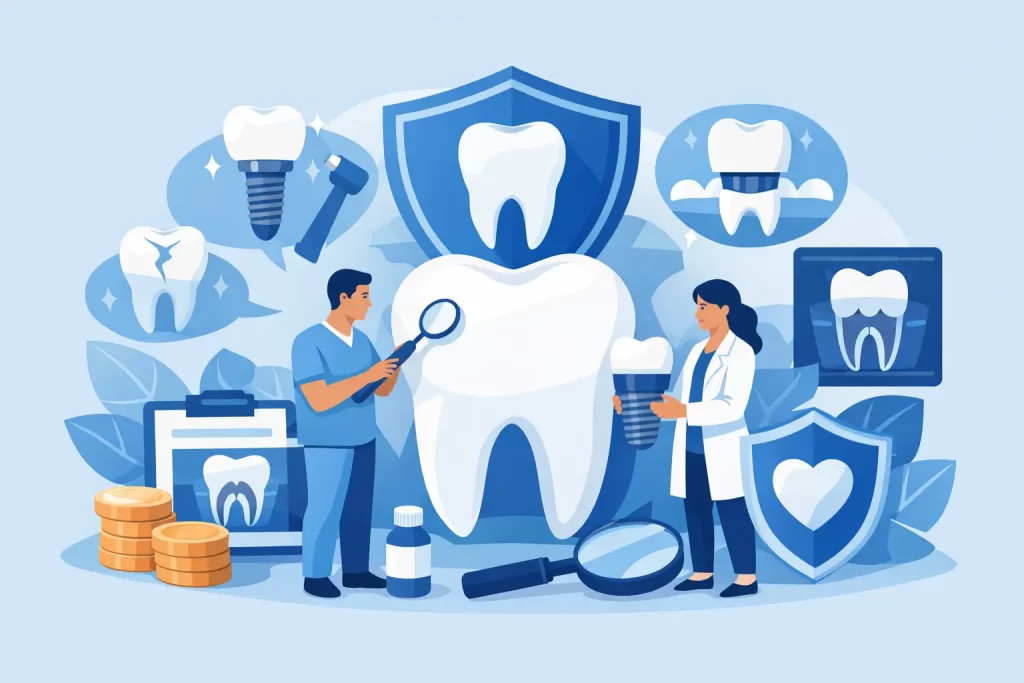
Restorative dentistry focuses on repairing teeth, replacing missing structure, and helping you keep your bite healthy and functional. That can include white fillings for decay, crowns for weakened teeth, root canal therapy for infected teeth, dentures to replace missing teeth, and extractions when a tooth cannot be saved.
Some plans also treat bridges, implants, and certain major oral rehabilitation services as restorative care, while others place them in a separate major-services category. The wording matters. A plan may say it covers restorative treatment, but the level of coverage can vary a great deal depending on whether the service is considered basic or major.
How to judge the best dental insurance for restorative care
The best dental insurance for restorative care usually has less to do with flashy marketing and more to do with five practical details.
First, look at the coverage percentage for basic and major services. Fillings are often classified as basic care, while crowns, dentures, and root canals may fall under major care depending on the insurer. A plan that covers preventive care at 100 percent but major care at only 20 percent may not be the strongest option if you already know you need significant treatment.
Second, check for waiting periods. Many dental plans require you to wait six to twelve months before they contribute toward major restorative services. If you need treatment soon, a plan with a waiting period may not help when you need it most.
Third, review the annual maximum. This is one of the biggest limitations patients miss. A plan may seem generous until you realize it only pays up to a fixed amount each year. Because crowns, root canals, and dentures can be costly, a low annual maximum may be used up quickly.
Fourth, pay attention to deductibles and copays. A lower monthly premium can come with higher out-of-pocket costs later. In some cases, paying a bit more each month leads to better value if restorative treatment is likely.
Fifth, make sure your dentist is included in the plan network if you want in-network pricing. Out-of-network benefits can still be useful, but they may leave you with a larger share of the cost.
Why cheap plans are not always the best option
It is tempting to choose the least expensive monthly premium and assume you are covered. With restorative dentistry, that approach can backfire.
A very low-cost plan may focus heavily on preventive care while offering limited help for treatment that repairs damage. Some plans restrict coverage for crowns to certain materials or front teeth only. Others cover extractions more readily than they cover the work needed to preserve a tooth. If your priority is keeping your natural teeth whenever possible, you want to read beyond the premium and look closely at the treatment categories.
This is one reason patients benefit from asking detailed questions before they commit. A good plan should support treatment decisions based on oral health needs, not push you toward the least comprehensive option because of narrow benefits.
The trade-offs between PPO, HMO, and discount plans
If you are comparing plan types, the best fit depends on how much flexibility you want and how soon you may need care.
PPO dental plans are often the most appealing for adults and families who want a wider choice of providers. They usually let you see in-network or out-of-network dentists, though the savings are generally better in-network. For restorative care, this flexibility can be helpful if you already trust a specific office and want to keep your treatment with the same team.
HMO or DHMO plans can have lower premiums, but they typically require you to use a network dentist and may have stricter rules. These plans can work well for some patients, though access and convenience depend heavily on the network in your area.
Discount dental plans are not insurance, but they are sometimes considered by patients trying to lower costs. They may offer reduced fees at participating offices without deductibles or waiting periods. That can be useful, but there is no insurer paying a percentage of your treatment. You are still covering the cost yourself, just at a discounted rate.
What to ask before choosing a plan
Before enrolling, ask how the plan handles fillings, crowns, root canals, dentures, and extractions specifically. Do not settle for general language about basic and major services if you already know which procedures may apply to you.
It also helps to ask whether there are frequency limits or replacement rules. For example, a crown replacement may only be covered after a certain number of years. Dentures may also be subject to replacement intervals. These details matter if you are planning treatment for older dental work that is failing.
You should also ask whether the insurer uses a missing tooth clause or downgraded fee structure. A missing tooth clause can limit benefits for tooth replacement if the tooth was lost before the policy began. A downgraded fee structure may mean the plan pays based on a less expensive procedure than the one your dentist recommends. That can leave a bigger balance than expected.
Best dental insurance for restorative care if you need treatment soon
If you already have a broken tooth, active decay, or pain, speed matters. In that situation, the best dental insurance for restorative care is often the plan with no waiting period for basic services and the shortest delay for major services, if any. A high annual maximum can also make a real difference.
That said, insurance is not always the only path. Some private dental offices offer flexible payment options that help patients move forward with needed treatment without waiting for benefits to activate. If a tooth can be preserved now, delaying care for coverage may lead to a larger and more expensive problem later.
For many patients, the smartest approach is to compare insurance benefits alongside the actual timing of care. A plan that saves money six months from now may not be the best option if treatment is urgent today.
Why the dentist’s approach still matters
Even the strongest insurance plan does not replace thoughtful, patient-centered care. Restorative treatment works best when your dentist takes time to explain your options, prioritizes preserving natural teeth when possible, and helps you understand both the clinical and financial side of treatment.
That is especially important when more than one solution is available. A filling, crown, root canal, extraction, or denture may each have a place depending on the condition of the tooth, your long-term goals, and your budget. Insurance may influence cost, but it should not be the only factor guiding the decision.
At Restorative Dental Jamaica, that is the kind of conversation we believe patients deserve – clear, reassuring, and focused on what supports comfort, function, and lasting oral health.
How to make a smart final choice
If you are shopping for coverage, start with your likely needs rather than the monthly premium alone. A person who only wants cleanings and checkups can choose differently from someone who may need crowns or dentures. If restorative care is your priority, look for stronger coverage on repair-focused services, manageable waiting periods, a realistic annual maximum, and a provider network that fits your life.
And if you already know treatment is needed, do not let insurance confusion keep you stuck. Ask questions, review the fine print, and talk with a dental team that will explain your options clearly. The right plan can help, but the real goal is simpler than that – getting the care you need in time to protect your smile and your peace of mind.
Leave a reply








Leave a reply