
What Reconstructive Dental Care Can Fix
A cracked tooth that starts as a small annoyance can quickly turn into pain when you chew, sensitivity to cold drinks, or the uneasy feeling that something is getting worse. That is often where reconstructive dental care begins – not with vanity, but with the need to eat comfortably, speak clearly, and protect the teeth you still have.
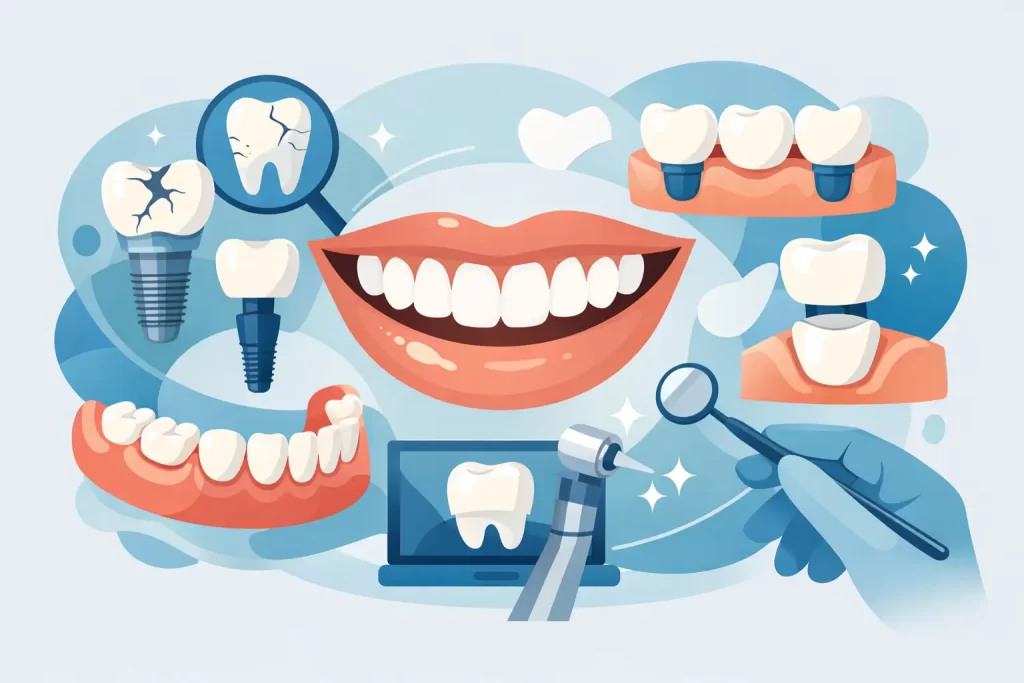
For many patients, the term sounds more complicated than it really is. Reconstructive dental care is the process of repairing teeth and oral structures that have been weakened, damaged, decayed, or lost. The goal is to restore function first, while also improving appearance and long-term oral health. In practical terms, that can mean saving a tooth with root canal therapy and a crown, rebuilding a cavity with a white filling, replacing missing teeth with dentures, or combining several treatments into one carefully planned approach.
What reconstructive dental care really means
Reconstructive treatment is not one procedure. It is a category of care built around repairing damage and preserving as much healthy tooth structure as possible. Some patients need a single, straightforward treatment. Others need a sequence of visits that addresses pain, infection, broken teeth, bite issues, and cosmetic concerns in the right order.
That is why the first step matters so much. A proper dental assessment, supported by digital x-rays and close visual imaging, helps identify what is happening below the surface. A tooth can look fine from the outside and still have deep decay, a crack, or an infection near the root. Good planning prevents guesswork and helps patients understand what needs attention now, what can wait, and what may happen if treatment is delayed.
Signs you may need reconstructive dental care
Sometimes the need is obvious. A tooth breaks, a filling falls out, or pain makes it impossible to ignore. In other cases, the signs are quieter and easier to put off.
You may benefit from reconstructive dental care if you have persistent tooth pain, sensitivity when eating or drinking, old dental work that keeps failing, visible decay, worn teeth, missing teeth, difficulty chewing, or gums that feel irritated around damaged areas. Some patients also seek treatment because their smile has changed over time and they want to restore both comfort and confidence.
It depends on the cause. Damage from trauma is different from damage caused by decay, grinding, or long-term wear. The treatment plan should reflect that difference rather than forcing every problem into the same solution.
Common treatments used in reconstructive cases
White fillings are often the simplest form of reconstruction. When decay is caught early, a filling can remove the damaged portion of the tooth and rebuild its shape with a natural-looking material. This works well for smaller to moderate cavities and helps preserve more of the original tooth.
When a tooth is more badly damaged, a dental crown may be the better choice. Crowns cover and strengthen a tooth that has been weakened by a large cavity, fracture, or root canal treatment. They are especially useful when there is not enough healthy structure left for a filling to hold up over time.
Root canal therapy becomes necessary when the inner tissue of the tooth is infected or inflamed. Many patients are nervous about hearing those words, but the purpose is straightforward – remove the infection, relieve pain, and save the natural tooth whenever possible. In many cases, that is far better than losing the tooth and needing a replacement later.
Dentures can be part of reconstructive treatment when several teeth are missing or when full-arch replacement is needed. Modern dentures are designed with comfort, function, and appearance in mind, though there is still an adjustment period. For some patients, they are the most practical and cost-conscious option.
Tooth extractions are sometimes included in a reconstructive plan, but usually only when a tooth cannot be predictably saved. That distinction matters. Good restorative care does not rush to remove teeth that can still function well with the right treatment.
Why early treatment usually means simpler treatment
One of the most common patterns in dental care is delay. A patient notices a problem, hopes it settles down, and books only when the issue becomes urgent. By that point, a small filling may have turned into a root canal and crown, or a repairable tooth may no longer be salvageable.
Early intervention does not just reduce discomfort. It often lowers the complexity, cost, and number of visits involved. A careful exam can reveal weak spots before they become emergencies, especially if you have a history of broken fillings, gum problems, clenching, or frequent decay.
That is also where preventive care supports reconstructive results. Cleanings, regular checkups, sealants where appropriate, and home care habits all help protect the work that has been done. Repairing a smile is one thing. Keeping it stable is just as important.
Reconstructive dental care and appearance
Patients sometimes assume reconstructive treatment is purely functional and cosmetic dentistry is purely aesthetic. In real life, the two often overlap.
A front tooth repaired after damage should feel strong, but it should also look natural when you smile. A crown on a back tooth should restore biting strength, but your bite should feel balanced too. Even dentures affect facial support, speech, and self-confidence as much as chewing.
That is why a thoughtful treatment plan considers both health and appearance. Shade matching, tooth shape, smile line, and overall comfort all matter. The best result usually does not look overdone. It looks healthy, stable, and like it belongs to you.
What to expect during the planning process
A good reconstructive experience should feel clear, not rushed. After your assessment, your dentist should explain the condition of your teeth, the recommended options, and why one approach may be stronger or more conservative than another.
In some cases, there are multiple reasonable choices. A heavily damaged tooth might be restored with a large filling in the short term, but a crown may offer better long-term protection. A painful tooth may be treatable with root canal therapy, but if the structure is too compromised, extraction may be the safer recommendation. These are not one-size-fits-all decisions.
Cost and timeline also play a role. Many patients need treatment phased over time, especially when several teeth are involved. That is completely normal. The most helpful dental teams present a practical path forward, address urgent issues first, and work with patients to make care manageable.
At Restorative Dental Jamaica, this kind of planning is supported by modern diagnostics and a patient-first approach, so people can make decisions with confidence rather than pressure.
Comfort matters more than people think
Dental treatment is not only about clinical skill. It is also about whether patients feel listened to, prepared, and at ease. That is especially true when reconstructive care involves multiple appointments or treatment for pain.
A comfortable environment can make a real difference for nervous patients and busy professionals alike. Clear communication, gentle care, efficient scheduling, and a calm office setting all help reduce the stress people often associate with dental visits. When patients feel respected and informed, they are more likely to follow through with the care they need.
That matters because unfinished treatment tends to create bigger problems later. A temporary solution left too long can fail. A tooth that needed strengthening can fracture further. A missing tooth can change how adjacent teeth carry pressure. Small delays have a way of becoming larger repairs.
How to know when it is time to book
If you are living with pain, avoiding one side of your mouth when chewing, hiding damaged teeth when you smile, or putting off care because the problem seems manageable for now, it is probably time for an evaluation. You do not need to wait for severe pain to justify an appointment.
Reconstructive dental care works best when it is guided by a clear diagnosis and a plan that fits your real needs. For some people, that means one filling and peace of mind. For others, it means rebuilding several areas carefully over time. Either way, the purpose is the same – protect your oral health, restore comfort, and help you feel confident every time you eat, speak, and smile.
If something in your mouth does not feel right, trust that instinct. Getting it checked early is often the simplest way to protect your smile and avoid a more difficult repair later.
Leave a reply








Leave a reply